
What is an AI Data Center and Why It Matters Now
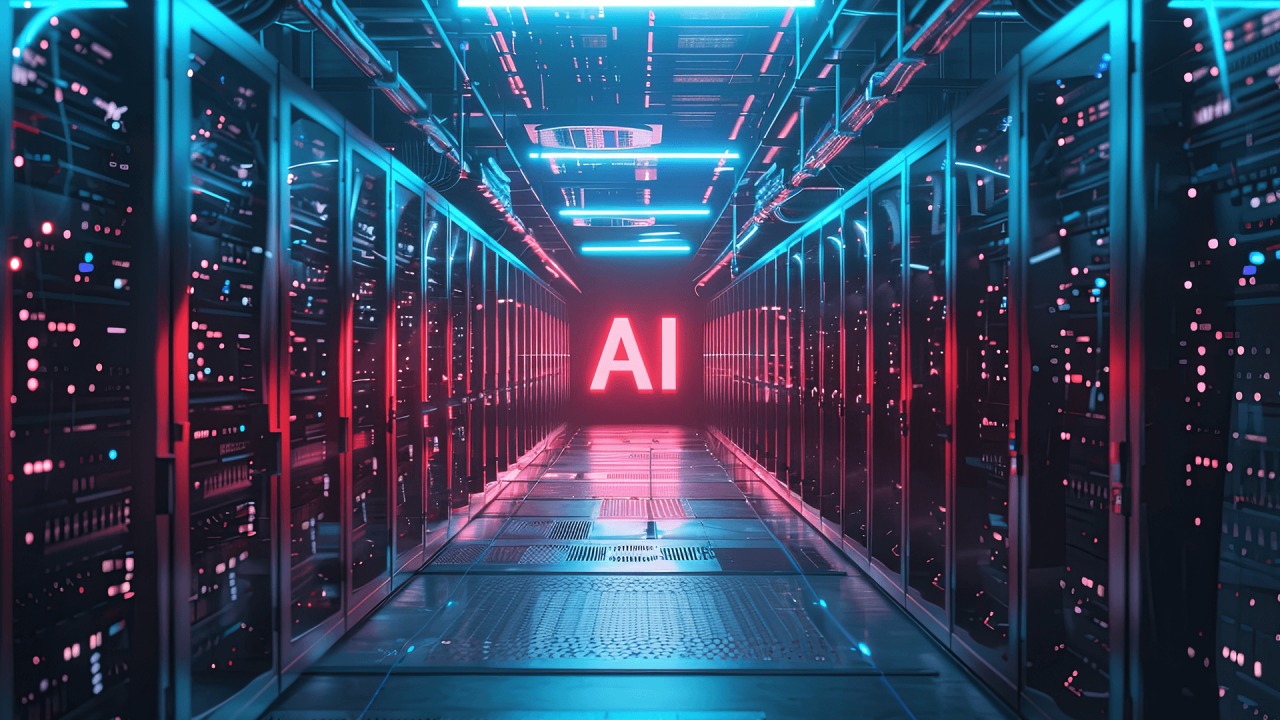
An AI Data Center is a specialized computing infrastructure designed to handle large-scale artificial intelligence workloads, including training and inference of machine learning models.
Unlike traditional data centers, AI data centers are built around parallel computing, high-bandwidth memory, and ultra-low latency architectures.
When we talk about AI Data Center transformation, we are no longer discussing incremental upgrades—but a fundamental redesign of compute, memory, and power systems.
Why AI Data Centers are critical in 2025:
- Explosive growth of generative AI and LLMs
- Massive increase in data processing requirements
- Shift from CPU-centric to accelerator-driven computing
- Rising demand for real-time AI inference
AI Data Center vs Traditional Data Center
The gap between AI and traditional infrastructure is widening rapidly.
| Aspect | Traditional Data Center | AI Data Center |
|---|---|---|
| Compute | CPU-centric | GPU/NPU-centric |
| Workload | Web, storage | AI training & inference |
| Memory | DDR-based | HBM + high bandwidth |
| Network | Standard | High-speed interconnect (InfiniBand) |
| Architecture | Scale-out | Parallel, distributed |
Key insight:
Traditional data centers optimize for efficiency, while AI data centers optimize for throughput and parallelism.
AI Compute Hardware: GPU, NPU, TPU
At the core of every AI Data Center is a new generation of specialized chips.
GPU (Graphics Processing Unit)
- Dominates AI training workloads
- Highly parallel architecture
- Widely used in data centers
NPU (Neural Processing Unit)
- Optimized for inference
- Lower power consumption
- Increasing adoption in edge AI
TPU (Tensor Processing Unit)
- Custom ASICs for AI workloads
- Designed for high efficiency in specific models
Strategic shift:
The AI Data Center is moving toward heterogeneous computing, where multiple chip types work together.
Memory in AI Data Centers: HBM, LPDDR5X, and CXL
Memory is now the bottleneck and differentiator in AI infrastructure.
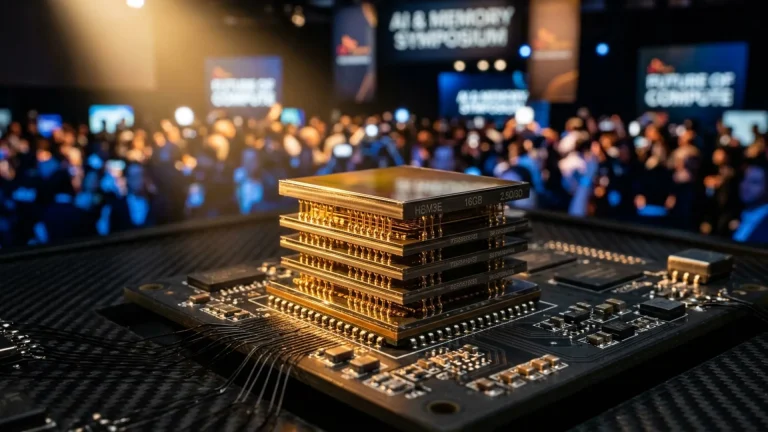
HBM (High Bandwidth Memory)
- Extremely high bandwidth
- Integrated with GPUs
- Critical for AI training
LPDDR5X
- High efficiency
- Used in edge AI and mobile AI
CXL (Compute Express Link)
- Emerging standard
- Enables memory pooling and scalability
- Redefines data center architecture
Key insight:
The future AI Data Center is memory-centric, not compute-centric.
Power Density and the Rise of Liquid Cooling
AI workloads dramatically increase power consumption.
Challenges:
- GPU clusters consuming megawatts
- Thermal management becoming critical
- Rack density increasing significantly
Solution: Liquid Cooling
- Direct-to-chip cooling
- Immersion cooling
- Improved energy efficiency
Trend:
Power density in AI data centers is expected to double by 2026, forcing a redesign of cooling infrastructure.
Impact on the Global Semiconductor Supply Chain
AI is reshaping the semiconductor industry.
Key impacts:
- Surge in demand for HBM memory
- Supply constraints in advanced packaging (CoWoS)
- Increased investment in foundries
Critical players:
- GPU manufacturers
- Memory suppliers (HBM, DRAM)
- Packaging and interconnect providers
Strategic implication:
Control over memory and advanced packaging becomes a competitive advantage.
Opportunities in Vietnam and Southeast Asia
Southeast Asia is emerging as a key region in the AI infrastructure landscape.
Growth drivers:
- Expansion of hyperscale data centers
- Government digital transformation initiatives
- Rising demand for cloud and AI services
Vietnam’s position:
- Strategic location in supply chain
- Growing semiconductor ecosystem
- Increasing investment in data center infrastructure
Opportunity for businesses:
- Infrastructure deployment
- Component distribution (memory, storage)
- System integration
Strategic Outlook: What Leaders Should Focus On
For decision-makers, the AI Data Center shift is not optional—it is inevitable.
Key priorities:
- Invest in high-bandwidth memory (HBM, DDR5)
- Adopt scalable architectures (CXL, modular design)
- Optimize power and cooling systems
- Build resilient supply chains
Frequently Asked Questions (FAQ)
What is an AI Data Center?
An AI Data Center is a facility optimized for artificial intelligence workloads using GPUs, high-speed memory, and parallel computing.
Why is HBM important in AI Data Centers?
HBM provides the bandwidth required for AI model training and large-scale data processing.
How are AI Data Centers different from traditional ones?
They rely on GPU/NPU architectures, high-bandwidth memory, and advanced cooling systems.
What is the future of AI Data Centers?
They will become more memory-centric, power-dense, and reliant on advanced semiconductor technologies.
Conclusion
The AI Data Center is no longer just an evolution—it is a complete transformation of digital infrastructure.
From GPUs and NPUs to HBM and liquid cooling, every layer of the stack is being redefined to support the next generation of AI applications.
At Pionix, we deliver advanced memory and server solutions tailored for AI workloads, enabling businesses to scale efficiently in this new era.
👉 Connect us to explore AI-ready memory and infrastructure solutions for your data center.