
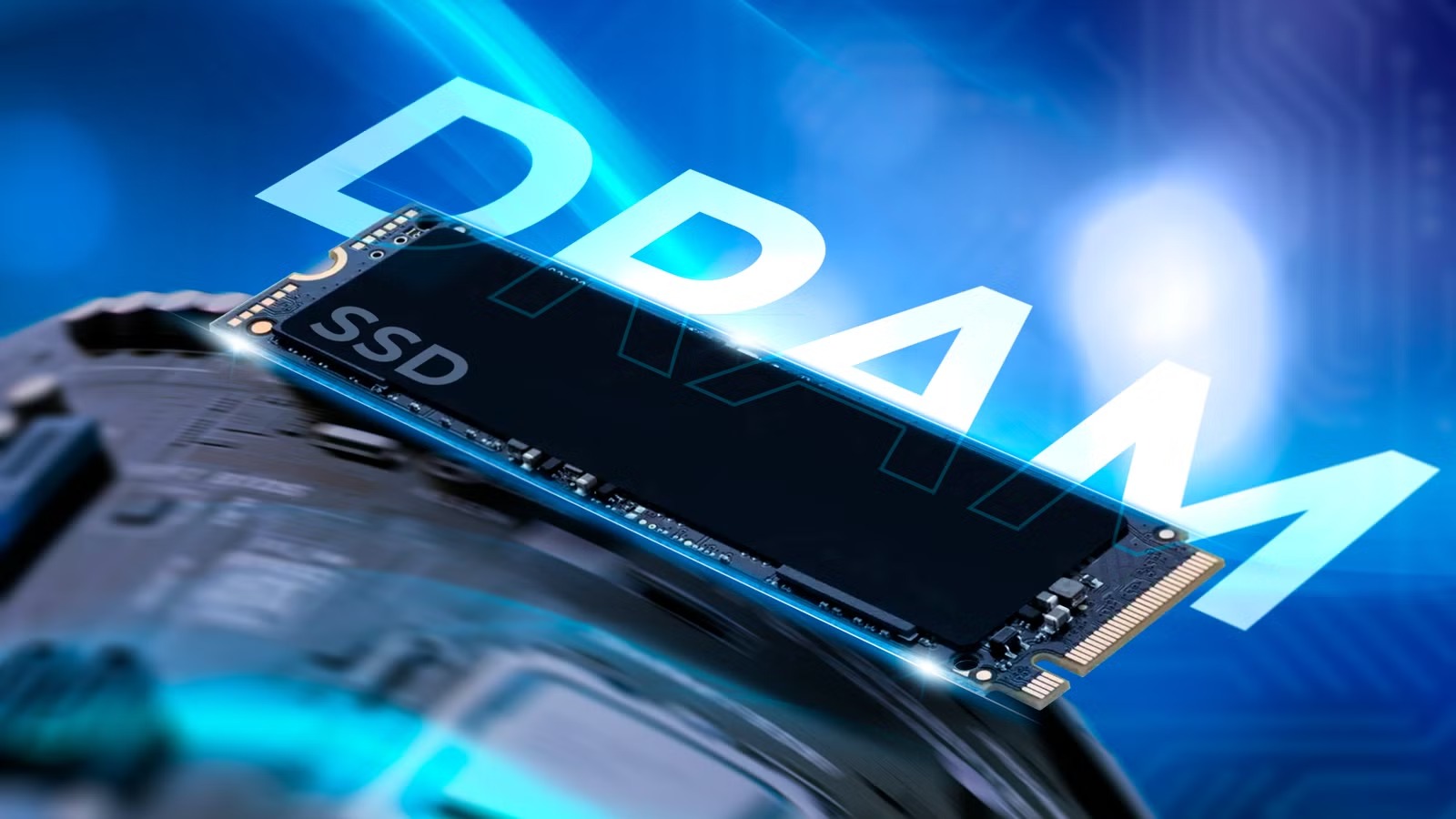
What is DRAM and Why is it Important?
DRAM (Dynamic Random Access Memory) is a type of volatile memory used to temporarily store data that the CPU or GPU needs in real time. Unlike NAND Flash, DRAM requires constant power to retain data.
In modern systems, DRAM plays a critical role in servers, AI infrastructure, and data centers where speed and responsiveness are essential.
Why DRAM matters:
- Enables ultra-fast data access
- Supports multitasking and real-time processing
- Essential for AI, cloud computing, and big data
How DRAM Impacts Real-World Performance
- Data centers rely on DRAM to run multiple workloads simultaneously
- AI training depends heavily on memory bandwidth
- Real-time applications require low latency memory access
As computing demands grow, DRAM becomes a key bottleneck or performance booster depending on its configuration.
DRAM vs SRAM vs NAND Flash
Understanding different memory types helps clarify DRAM’s role:
| Memory Type | Speed | Volatility | Cost | Use Case |
|---|---|---|---|---|
| DRAM | High | Volatile | Medium | System memory |
| SRAM | Very High | Volatile | Very High | CPU cache |
| NAND Flash | Lower | Non-volatile | Low | Storage |
Key takeaway:
- DRAM = working memory
- SRAM = cache memory
- NAND = storage memory
How DRAM Works (Refresh Mechanism Explained)
DRAM stores data using capacitors that gradually lose charge. To maintain data integrity, it must refresh constantly.
Core operations:
- Read: Access stored data
- Write: Store electrical charge
- Refresh: Restore charge periodically
Key limitation:
- Requires continuous power
- Consumes energy due to refresh cycles
DDR4 vs DDR5: Performance, Bandwidth, and Efficiency
DDR memory defines how DRAM performs in modern systems.
| Feature | DDR4 | DDR5 |
|---|---|---|
| Bandwidth | Lower | Higher |
| Speed | Up to ~3200 MT/s | 4800+ MT/s |
| Power Efficiency | Moderate | Improved |
| Capacity | Limited | Higher |
Why DDR5 matters:
- Higher bandwidth for AI workloads
- Better scalability for servers
- Improved energy efficiency
Key Factors When Choosing DRAM
- Capacity for workload size
- Bandwidth for performance
- Latency for responsiveness
- Power efficiency for data centers
HBM (High Bandwidth Memory) – DRAM for AI & GPU
HBM is an advanced form of DRAM designed for high-performance computing.
Key advantages:
- Extremely high bandwidth
- Compact 3D stacked design
- Optimized for GPUs and AI accelerators
HBM vs Traditional DRAM
Use HBM when:
- Running AI training models
- Using GPUs or HPC systems
Use DDR DRAM when:
- Running general workloads
- Optimizing cost and scalability
DRAM Trends 2025–2026
The DRAM industry is evolving rapidly due to AI demand.
Key trends:
- AI workloads driving memory innovation
- DDR5 becoming standard in servers
- HBM expanding in AI and GPU systems
- Increasing demand in hyperscale data centers
Leading manufacturers:
- Samsung
- SK Hynix
- Micron
To better understand what is DRAM, it is important to look at how it interacts with modern processors and memory architectures.
The Role of DRAM in Modern Data Centers
DRAM is a core component in cloud infrastructure and enterprise systems.
Key roles:
- Enables virtualization and containerization
- Supports real-time analytics
- Accelerates databases and applications
- Improves system throughput
As AI adoption grows, DRAM capacity and bandwidth become critical for scalability.
Frequently Asked Questions (FAQ)
What is DRAM used for?
DRAM is used as system memory in computers, servers, and AI systems to store data temporarily for fast processing.
Is DRAM the same as RAM?
DRAM is the most common type of RAM used in modern devices.
What is the difference between DRAM and DDR5?
DRAM is the memory technology, while DDR5 is a specific standard of DRAM.
Why is DRAM important for AI?
AI requires high-speed memory to process large datasets efficiently, making DRAM essential.
Conclusion
Now that you understand what is DRAM, it is clear that it plays a critical role in modern computing, enabling high-speed data processing across servers, AI systems, and data centers. With innovations like DDR5 and HBM, DRAM continues to evolve to meet the demands of next-generation technologies.
At Pionix, we provide advanced memory solutions tailored for AI, servers, and industrial applications—from component sourcing to system integration.
👉 Connect us today to find the right DRAM solution for your business.