
What is a Wiring Harness – Definition and Role
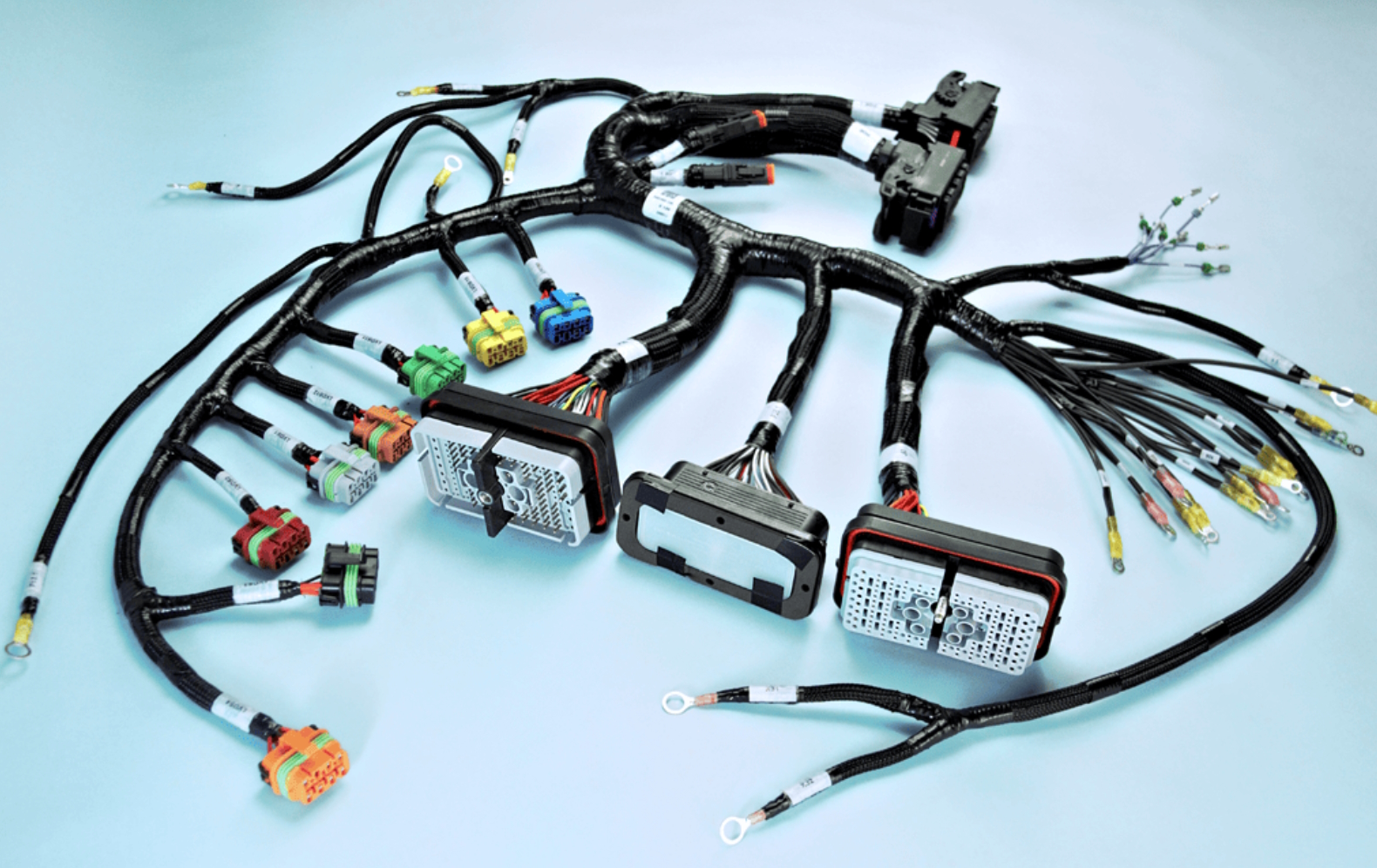
A wiring harness is an organized assembly of wires, terminals, and connectors designed to transmit electrical power and signals within a system.
If you are asking what is a wiring harness, think of it as the central nervous system of electronic equipment, ensuring reliable communication between components.
Key functions:
- Power distribution
- Signal transmission
- Protection against environmental factors
- Simplified installation and maintenance
Why it matters in automotive systems:
- Reduces wiring complexity
- Improves reliability and safety
- Supports advanced vehicle electronics (ADAS, EV systems)
Wiring Harness Structure: Wires, Terminals, and Protection
To fully understand what is a wiring harness, it is important to analyze its components.
Core elements:
- Wires & Cables: carry electrical signals and power
- Terminals & Connectors: enable secure electrical connections
- Insulation & Sheathing: protect against heat, moisture, abrasion
- Cable Ties & Sleeves: organize and bundle wiring
Design considerations:
- Current capacity and voltage rating
- Environmental resistance (temperature, vibration)
- Flexibility and routing constraints
Wiring Harness Design Process: CAD Routing and Simulation
Designing a wiring harness requires precision engineering.
Key design steps:
- System architecture definition
- Schematic design
- CAD routing (2D/3D)
- Bend radius and stress simulation
- Prototype validation
Engineering tools:
- CAD software (e.g., harness design platforms)
- Simulation tools for mechanical stress
- Electrical validation systems
Why design matters:
A poorly designed harness can lead to:
- Signal loss
- Overheating
- Mechanical failure
Key Standards: USCAR, IPC/WHMA-A-620, ISO/TS 16949
Standards ensure quality and reliability in wiring harness production.
USCAR Standards
- Automotive-specific requirements
- Focus on connectors and performance
- Widely adopted by OEMs
IPC/WHMA-A-620
- Global standard for cable and harness assemblies
- Defines workmanship criteria
- Covers inspection and acceptance
ISO/TS 16949 (IATF 16949)
- Automotive quality management system
- Ensures process consistency and traceability
Key insight:
Compliance with these standards is mandatory for high-reliability applications, especially in automotive and aerospace sectors.
Testing and Validation: Ensuring Reliability
Testing is critical to guarantee performance and safety.
Common validation methods:
- Pull Force Test: ensures mechanical strength
- Dielectric Test: verifies insulation integrity
- Continuity Test: checks electrical connections
- Environmental Testing: temperature, humidity, vibration
Advanced testing:
- Thermal cycling
- Salt spray testing
- EMC/EMI validation
Outcome:
- Reduced failure rates
- Increased product lifespan
- Compliance with industry standards
Applications: Automotive, Industrial, Consumer Electronics
Understanding what is a wiring harness also requires real-world context.
Automotive
- Engine control units (ECU)
- ADAS systems
- Electric vehicles (EV)
Industrial Automation
- Robotics systems
- Control panels
- Machinery wiring
Consumer Electronics
- Home appliances
- Smart devices
Key trend:
As systems become more complex, wiring harness design becomes more critical.
Pionix Wiring Harness Solutions
At Pionix, we provide end-to-end wiring harness solutions tailored to industrial and automotive applications.
Our capabilities:
- Custom harness design and prototyping
- Compliance with USCAR and IPC standards
- Advanced testing and validation
- Scalable production
What differentiates Pionix:
- Strong integration with EMS and semiconductor solutions
- Fast turnaround from design to production
- High reliability for mission-critical applications
Frequently Asked Questions (FAQ)
What is a wiring harness used for?
It is used to organize and transmit electrical power and signals in systems such as vehicles and industrial equipment.
What standards apply to wiring harnesses?
USCAR, IPC/WHMA-A-620, and ISO/IATF 16949 are the most important standards.
Why is wiring harness design important?
Proper design ensures reliability, safety, and performance.
Which industries rely on wiring harnesses?
Automotive, industrial automation, aerospace, and consumer electronics.
Conclusion
Now that you understand what is a wiring harness, its design process, and the standards governing its production, it becomes clear that harness quality directly impacts system reliability.
In high-demand industries like automotive and industrial automation, choosing the right wiring harness partner is essential.
At Pionix, we deliver high-quality wiring harness solutions that meet global standards and support your product lifecycle from design to mass production.
👉 Connect us today to discuss your wiring harness requirements and engineering solutions.