
Samsung V-NAND 2026 – Technology Innovation and Strategic Market Positioning
The NAND flash market is entering a new phase in 2026. Instead of focusing solely on increasing storage density, manufacturers are now optimizing for AI workloads, enterprise SSD performance, and power efficiency.
Among all memory vendors, Samsung remains one of the most influential players thanks to its long-term leadership in V-NAND technology and enterprise storage solutions.
For system integrators, OEMs, and data center operators, understanding Samsung’s V-NAND roadmap is critical for planning future storage infrastructure.
Samsung’s Leadership in the Global NAND Market
Samsung has maintained a leading position in NAND flash for more than a decade.
Its success comes from:
- Early adoption of 3D NAND technology
- Strong investment in semiconductor manufacturing
- Vertical integration from NAND fabrication to SSD products
- Global ecosystem partnerships
In 2026, Samsung continues to focus on:
- Enterprise SSD
- AI Data Center storage
- Automotive storage
- High-capacity cloud infrastructure
The company is increasingly aligning its NAND roadmap with the explosive growth of AI infrastructure worldwide.
What is V-NAND and Why Does It Matter?
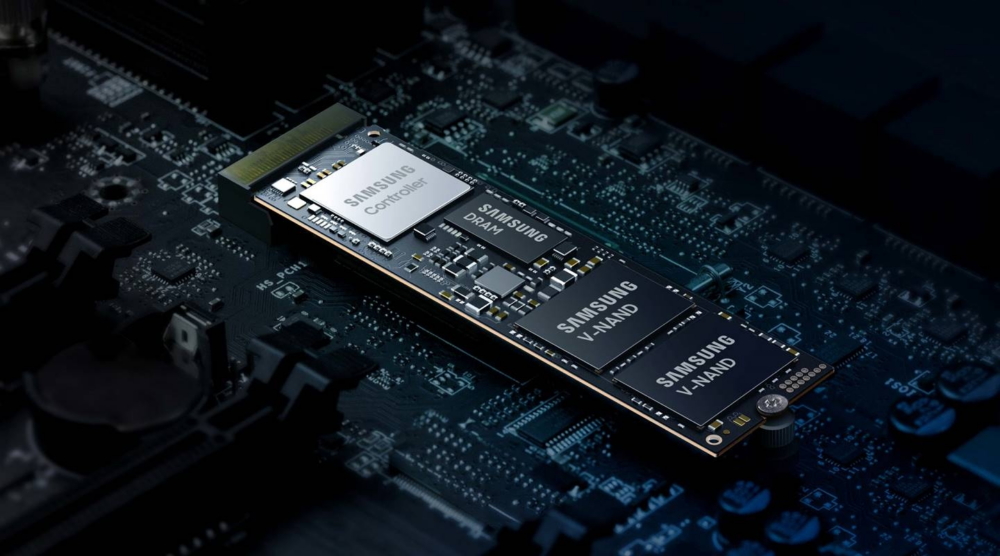
V-NAND (Vertical NAND) is Samsung’s implementation of 3D NAND flash memory.
Instead of placing memory cells side by side on a flat surface, V-NAND stacks cells vertically across multiple layers.
Benefits include:
- Higher storage density
- Lower power consumption
- Better endurance
- Improved scalability
Compared with traditional planar NAND, V-NAND enables significantly larger capacities without increasing chip size.
This architecture has become the foundation of modern SSD products.
Samsung’s Latest V-NAND Architecture in 2026
Samsung’s newest V-NAND generation focuses on three major objectives:
Higher Layer Counts
Layer counts continue increasing to improve storage density and manufacturing efficiency.
Benefits include:
- More terabytes per package
- Reduced cost per bit
- Better scalability for hyperscale customers
Improved Performance
Samsung is optimizing NAND interfaces and controllers to support:
- Faster enterprise SSDs
- AI data processing
- Large-scale cloud storage
Better Power Efficiency
Power efficiency has become a critical metric for data centers.
Modern V-NAND architectures reduce:
- Energy consumption
- Cooling requirements
- Total operating cost
This is particularly important for AI infrastructure where storage systems must scale efficiently.
Samsung’s QLC vs TLC Strategy for Enterprise SSD
One of the biggest shifts in Samsung NAND Flash 2026 is the expansion of QLC adoption.
TLC NAND
Advantages:
- Higher endurance
- Better write performance
- Proven enterprise reliability
Best suited for:
- Transaction databases
- Write-intensive workloads
- Mission-critical systems
QLC NAND
Advantages:
- Lower cost per gigabyte
- Higher storage density
- Better economics for large-scale deployments
Best suited for:
- AI datasets
- Content delivery
- Cloud storage
- Read-intensive applications
Comparison Table
| Feature | TLC NAND | QLC NAND |
|---|---|---|
| Endurance | Higher | Lower |
| Cost/GB | Higher | Lower |
| Density | High | Very High |
| AI Storage | Good | Excellent |
| Enterprise Adoption | Mature | Growing Fast |
Samsung’s strategy increasingly positions QLC as the preferred architecture for AI storage and hyperscale cloud deployments.
Samsung vs SK hynix vs Micron in 2026
Competition remains intense among the three major NAND suppliers.
Samsung
Strengths:
- Largest ecosystem
- Strong SSD portfolio
- Advanced V-NAND roadmap
SK hynix
Strengths:
- Enterprise SSD growth
- Strong AI-related investments
- Synergies with HBM leadership
Micron
Strengths:
- Cost efficiency
- Advanced controller optimization
- Strong North American customer base
The competition is no longer solely about layer count.
Today’s battle revolves around:
- AI infrastructure readiness
- Enterprise SSD performance
- Storage density
- Power efficiency
Impact on the Global NAND Supply Chain
Samsung’s NAND strategy influences the entire semiconductor ecosystem.
Key effects include:
Enterprise SSD Expansion
Growing deployment of:
- AI clusters
- Hyperscale data centers
- Cloud infrastructure
Pricing Dynamics
Supply discipline among manufacturers is helping stabilize NAND pricing.
AI-Driven Demand
AI workloads are creating a structural increase in storage requirements.
As a result, enterprise SSD demand is expected to remain a major growth engine through 2026 and beyond.
Opportunities for Distributors and System Integrators
The rapid evolution of NAND technology creates opportunities for value-added distributors.
Potential areas include:
- Enterprise SSD deployment
- Embedded storage solutions
- Industrial automation systems
- AI server integration
For companies operating in Southeast Asia, particularly Vietnam, demand for high-capacity SSD solutions is expected to grow alongside data center investments and digital transformation initiatives.
Frequently Asked Questions (FAQ)
What is Samsung V-NAND?
Samsung V-NAND is a 3D NAND flash technology that stacks memory cells vertically to increase storage density and efficiency.
Why is QLC important in 2026?
QLC enables higher storage density and lower cost per gigabyte, making it ideal for AI and cloud storage applications.
Is TLC still relevant?
Yes. TLC remains the preferred choice for write-intensive enterprise workloads requiring higher endurance.
Who are Samsung’s biggest NAND competitors?
SK hynix and Micron remain Samsung’s primary competitors in the global NAND market.
Conclusion
Samsung V-NAND 2026 reflects a broader transformation occurring across the storage industry.
The focus has shifted from simply increasing NAND layers to optimizing storage solutions for AI infrastructure, hyperscale cloud environments, and enterprise SSD deployments.
As AI applications continue to expand, NAND flash will remain a foundational technology powering the next generation of data centers and intelligent systems.
For organizations evaluating storage strategies, understanding Samsung’s V-NAND roadmap provides valuable insight into where the semiconductor market is heading over the next several years.