
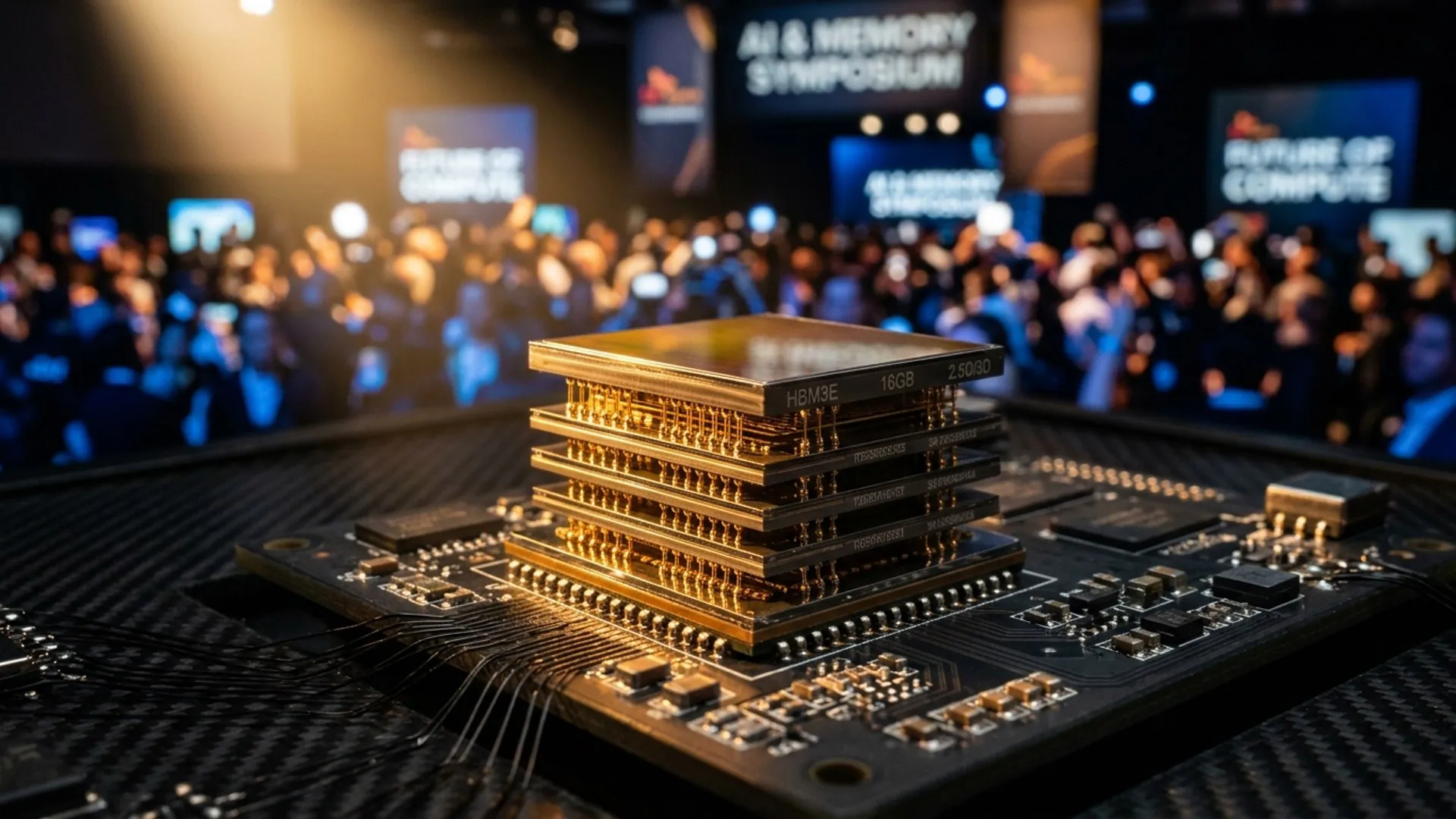
SK hynix HBM3E 2026 – The AI Memory Driving Next-Generation Computing
Artificial Intelligence is fundamentally reshaping the semiconductor industry. While GPUs often receive most of the attention, modern AI infrastructure depends just as heavily on advanced memory technologies capable of feeding enormous amounts of data to increasingly powerful processors.
Among all memory suppliers, SK hynix HBM3E has become one of the most influential technologies supporting the global AI ecosystem. From hyperscale cloud providers to next-generation GPU accelerators, HBM3E is now a critical component in enabling large language models (LLMs), generative AI, scientific computing, and high-performance data centers.
In 2026, the conversation has shifted beyond raw compute performance. Memory bandwidth, packaging technology, energy efficiency, and supply chain capacity are now strategic differentiators that determine the scalability of AI infrastructure.
This article explores how SK hynix HBM3E is shaping the future of AI memory, the company’s DDR5 roadmap, the competitive landscape, and the broader impact on the global DRAM market.
What is HBM3E and Why Does AI Depend on It?
HBM3E (High Bandwidth Memory 3 Extended) is the latest evolution of stacked DRAM technology engineered specifically for AI accelerators and high-performance computing platforms.
Unlike conventional DDR memory, HBM integrates multiple DRAM dies vertically using Through-Silicon Vias (TSVs), enabling dramatically higher bandwidth while reducing power consumption and physical footprint.
Key Advantages
- Extremely high memory bandwidth
- Low latency communication
- Compact package size
- Better energy efficiency
- Optimized for GPU acceleration
These characteristics make HBM3E particularly suitable for AI model training, inference clusters, and advanced data analytics.
Why HBM3E Has Become Essential for AI GPUs
Modern AI GPUs process trillions of parameters across enormous datasets. Without sufficient memory bandwidth, even the most powerful processors cannot reach their full potential.
HBM3E addresses this bottleneck by delivering exceptionally high data throughput while maintaining lower latency than conventional memory architectures.
Benefits for AI Infrastructure
- Faster model training
- Improved inference performance
- Reduced processing bottlenecks
- Higher GPU utilization
- Lower energy consumption per workload
As AI workloads continue to expand, memory bandwidth is becoming just as important as compute performance.
SK hynix’s HBM3E Leadership and DDR5 Roadmap
SK hynix has established itself as one of the industry’s leading suppliers of advanced AI memory.
Its strategy focuses on three pillars:
HBM Innovation
Continuous improvements in:
- Layer stacking
- Thermal efficiency
- Signal integrity
- Manufacturing yield
DDR5 Development
Alongside HBM, SK hynix continues expanding its DDR5 portfolio for:
- Enterprise servers
- Cloud infrastructure
- AI clusters
- High-density computing
Advanced Packaging
The company is investing heavily in packaging technologies that enable tighter integration between GPUs and HBM, supporting higher bandwidth and lower power consumption.
This combination positions SK hynix as a strategic supplier for next-generation AI platforms.
DRAM Market Competition: SK hynix vs Samsung vs Micron
The global DRAM market remains highly competitive, with three major manufacturers driving innovation.
| Company | Key Strength | Strategic Focus |
|---|---|---|
| SK hynix | HBM leadership | AI memory, advanced packaging |
| Samsung | Largest DRAM portfolio | Enterprise, AI, consumer memory |
| Micron | Power efficiency | Data center and automotive memory |
Rather than competing solely on production volume, vendors are increasingly differentiating themselves through:
- AI-optimized memory
- Energy efficiency
- Packaging technology
- Long-term supply stability
- Software ecosystem compatibility
DRAM Pricing and the Global Supply Chain in 2026
The rapid expansion of AI infrastructure continues to reshape the global memory market.
Several factors are influencing pricing and availability:
AI-Driven Demand
Large-scale AI deployments require unprecedented amounts of HBM and DDR5 memory.
Capacity Allocation
Manufacturers are dedicating more production capacity to premium AI memory products, reducing supply for some traditional DRAM segments.
Advanced Packaging Constraints
Technologies such as CoWoS, TSV integration, and advanced chip packaging remain critical bottlenecks for AI hardware production.
Supply Chain Diversification
Governments and semiconductor companies continue investing in geographically diversified manufacturing to improve resilience and reduce dependency on a single production region.
These trends are expected to influence pricing, lead times, and procurement strategies throughout 2026 and beyond.
The Future of AI Memory Beyond HBM3E
The AI memory ecosystem is evolving rapidly.
Emerging technologies expected to influence future AI infrastructure include:
- HBM4
- CXL Memory Expansion
- DDR6
- Compute-in-Memory architectures
- Photonic interconnects
- Chiplet-based memory integration
Rather than replacing HBM, these technologies are expected to complement high-bandwidth memory in increasingly heterogeneous computing environments.
Frequently Asked Questions
What is SK hynix HBM3E?
HBM3E is SK hynix’s latest generation of High Bandwidth Memory designed for AI GPUs, high-performance computing, and hyperscale data centers.
Why is HBM3E important for AI?
HBM3E provides the bandwidth required to feed modern AI accelerators with massive amounts of data, reducing bottlenecks and improving overall performance.
Is DDR5 still important?
Yes. While HBM powers AI accelerators, DDR5 remains the primary system memory for enterprise servers and cloud infrastructure.
Who are SK hynix’s main competitors?
Samsung and Micron continue to be the company’s primary competitors in the global DRAM market.
Will HBM4 replace HBM3E?
HBM4 is expected to enter commercial deployment over the coming years, but HBM3E will remain widely adopted in AI infrastructure during the transition period.
Conclusion
Artificial Intelligence has fundamentally transformed the priorities of the memory industry.
Instead of simply increasing capacity, manufacturers are now optimizing for bandwidth, power efficiency, thermal performance, and advanced packaging.
SK hynix HBM3E represents one of the most significant milestones in this transformation, enabling next-generation AI systems to process increasingly complex workloads with greater efficiency.
As AI infrastructure continues expanding across hyperscale data centers, cloud platforms, and enterprise computing, advanced memory technologies such as HBM3E, DDR5, and future HBM4 solutions will remain at the core of digital innovation.
For system designers, OEMs, and semiconductor partners, understanding the evolution of AI memory is no longer optional—it is essential for building competitive products and infrastructure.